This post is for all the crocheters out there. I have recently discovered that there is an actual difference between yarn over and yarn under when crocheting. The look on my mother’s face at Thanksgiving when I asked her which way she works the yarn around the hook.
I ran inside and grabbed yarn and hook and we played around for a bit. We pulled my daughter in too. She is a lefty crocheter but the idea is the same.
This is crazy to me. I’ve known for a while, over a decade, that I don’t crochet “correctly” and have used that disclaimer in some of my videos, including my beginner videos. However, my work still closely resembles everyone else’s and is award winning.
What I didn’t know is that working the same yarn over or yarn under each time the yarn needs to go around your hook can make a difference in the gauge of the piece that you are making. I will share some photos of what it looks like to yarn over and yarn under and show you the difference it makes in the gauge. I will also share how I wrap the yarn for each part of the stitches.
Grab a hook, some yarn and come along on this crochet adventure!
Back to the Thanksgiving adventure. Mom picked up the hook, made a few chains and then began working single crochets into those chains. She slowed down and I told that she was yarning over. I took the work from her and showed her what I do, yarn under. She took it all back and tried to do what I did and got all tangled up.
Then I noticed something else, the way she holds her hook is different than how I hold my hook. She holds it like a pencil and I use the knife hold.

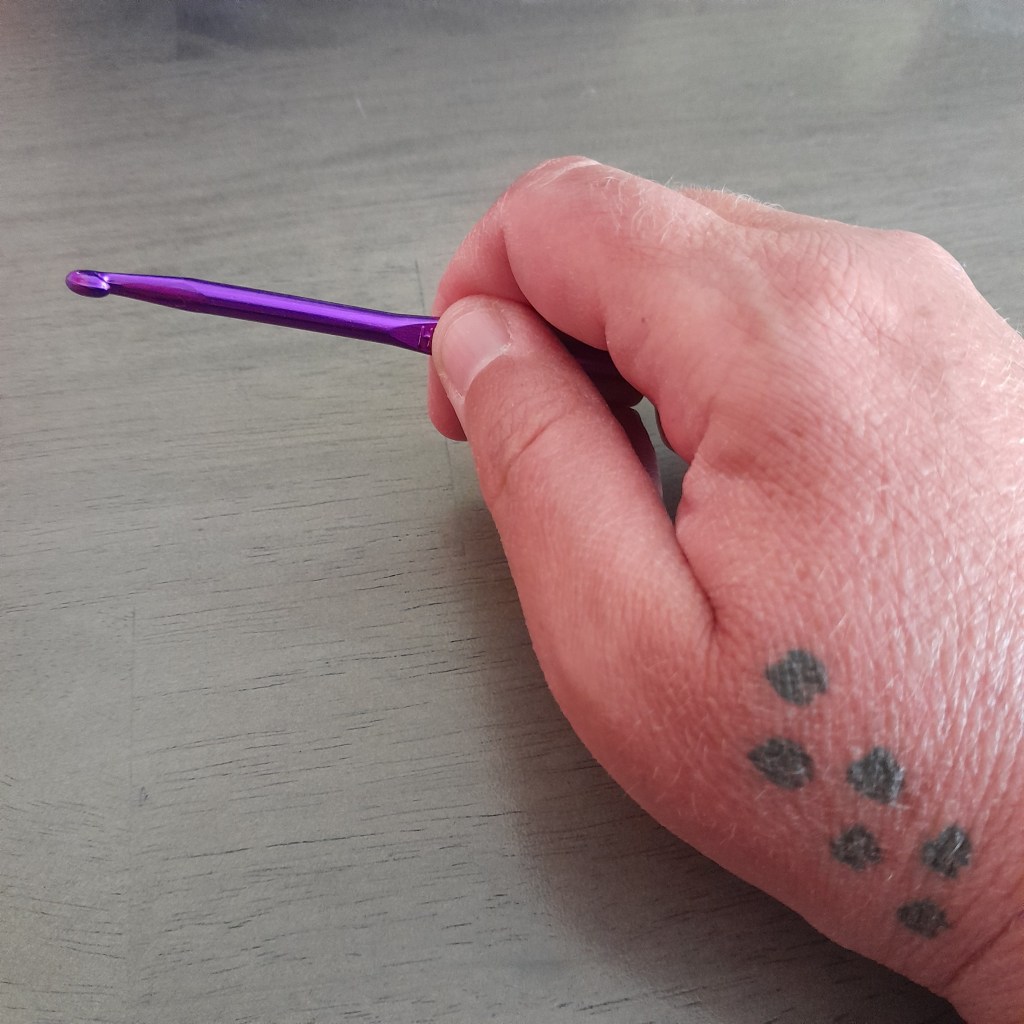
We both tried switching how we hold the hook and yarning around the hook as the other does and we just ended up with a mess. We are too far into this game to change something so simple, so drastically.
My daughter, lefty crocheter, witnessed none of this as she was preparing the veggie tray. We handed her the hook and yarn and gave instructions one step at a time. She uses a knife and works yarn unders as I do.
After this little experiment I came to the conclusion that yarn over is easier with the pencil hold and yarn under is easier with the knife hold. Part of that is the direction the hook itself faces. I couldn’t get Mom to understand that she need to slightly roll the hook in her fingers to able to better catch the yarn.
Over or under? It’s about where the yarn is coming from, not where it’s going.
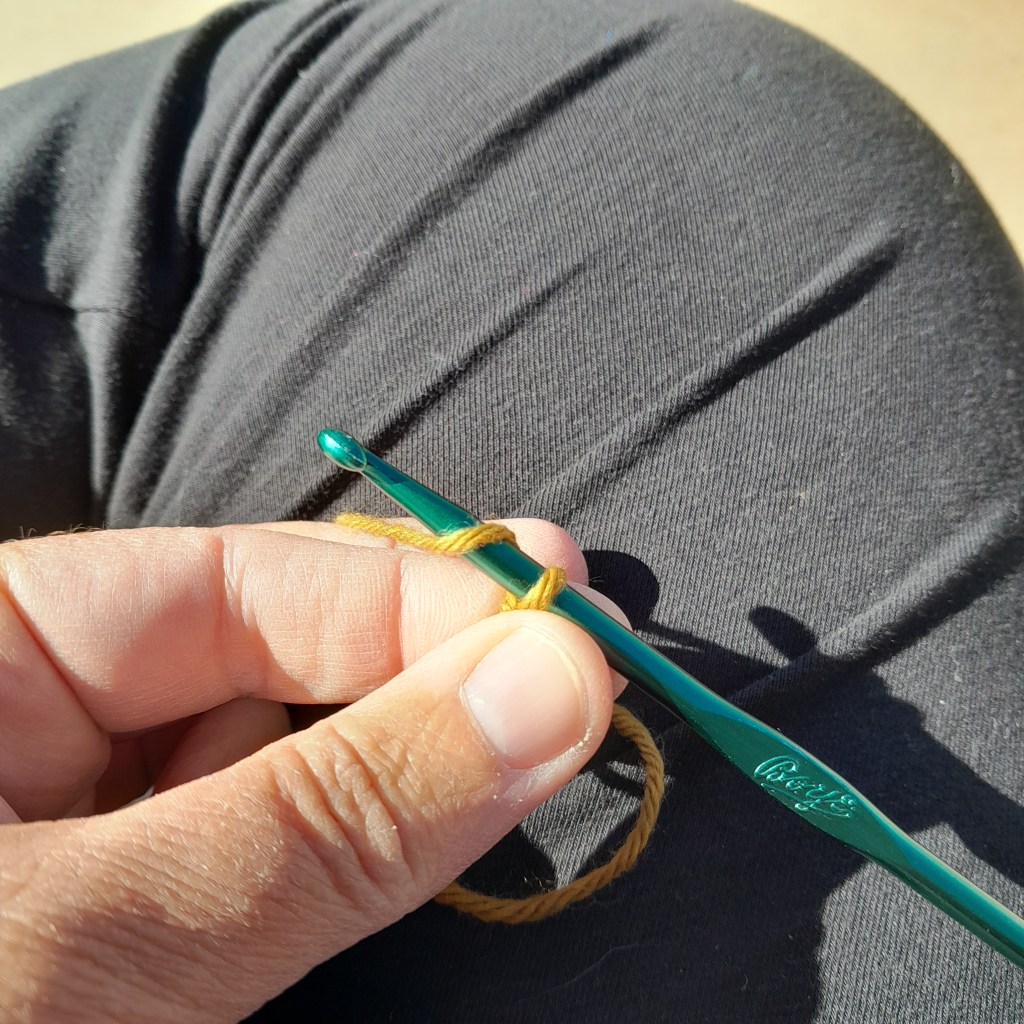

The differences here are subtle but if you look you can see them. For “over” the yarn comes from behind the hook and then sits in front, for “under” the yarn come from in front of the hook and goes behind.
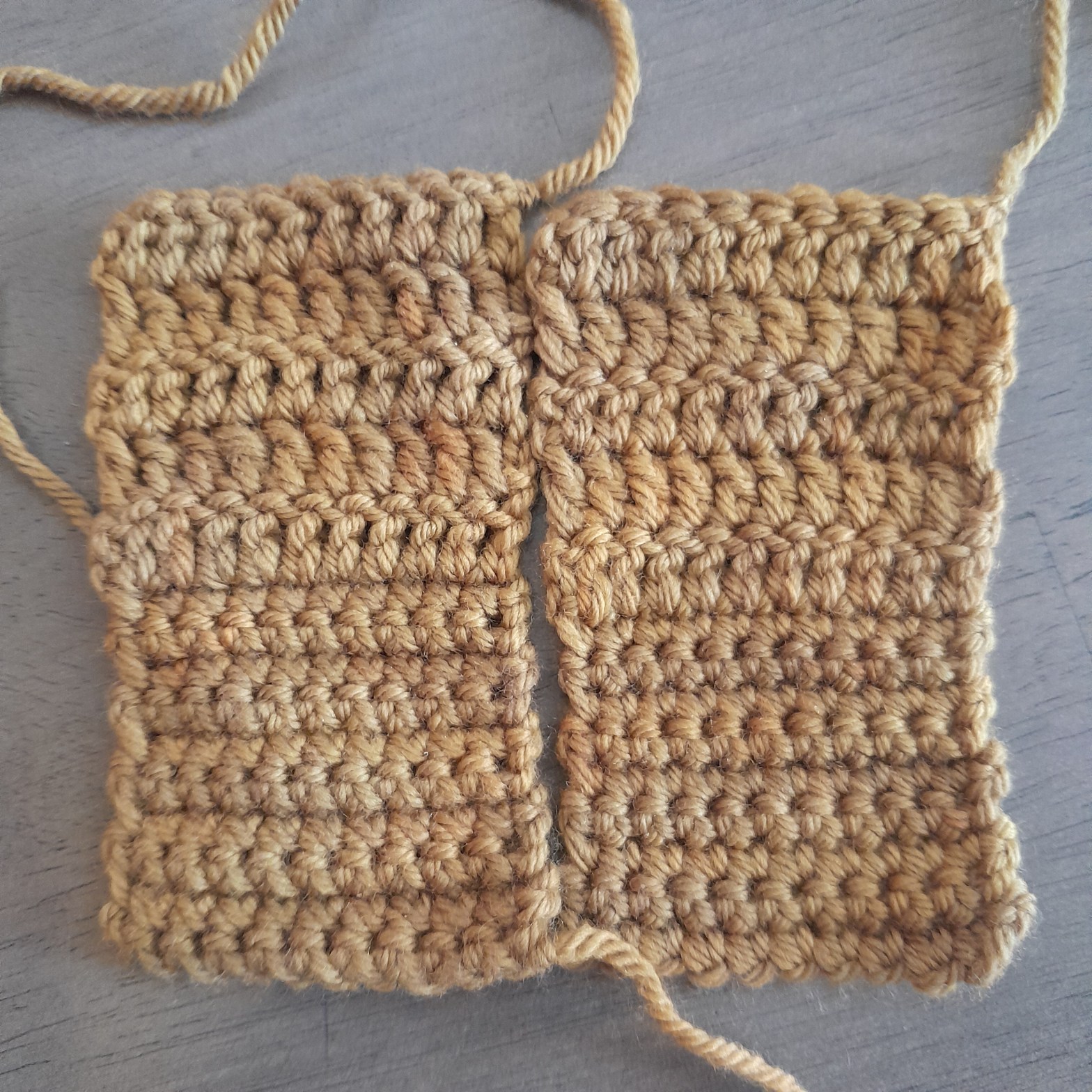
I made a swatch using all yarn unders and the same kind of swatch using all yarn overs. The “overs” swatch was hard. The stitches laid differently and were difficult to get back into the tops of. That first row was probably the hardest I have ever worked. It also hurt my hand. I worked both swatches using the knife hold.
The photo below has the unders swatch on the left and the overs swatch on the right. You can see there is a small difference in the size of the swatches, even though all other variables are equal.
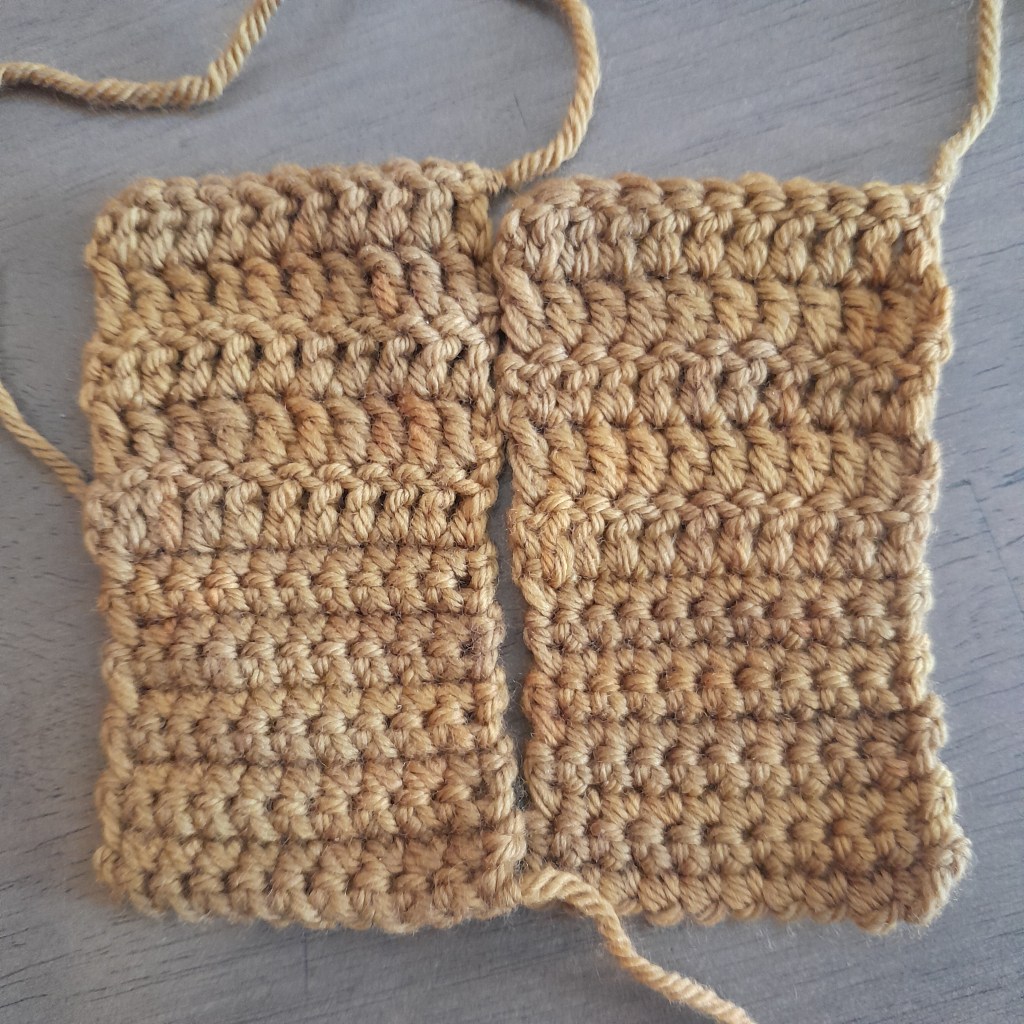
In the photos below you can see the slight differences between the single crochets. Unders on the left and overs on the right.
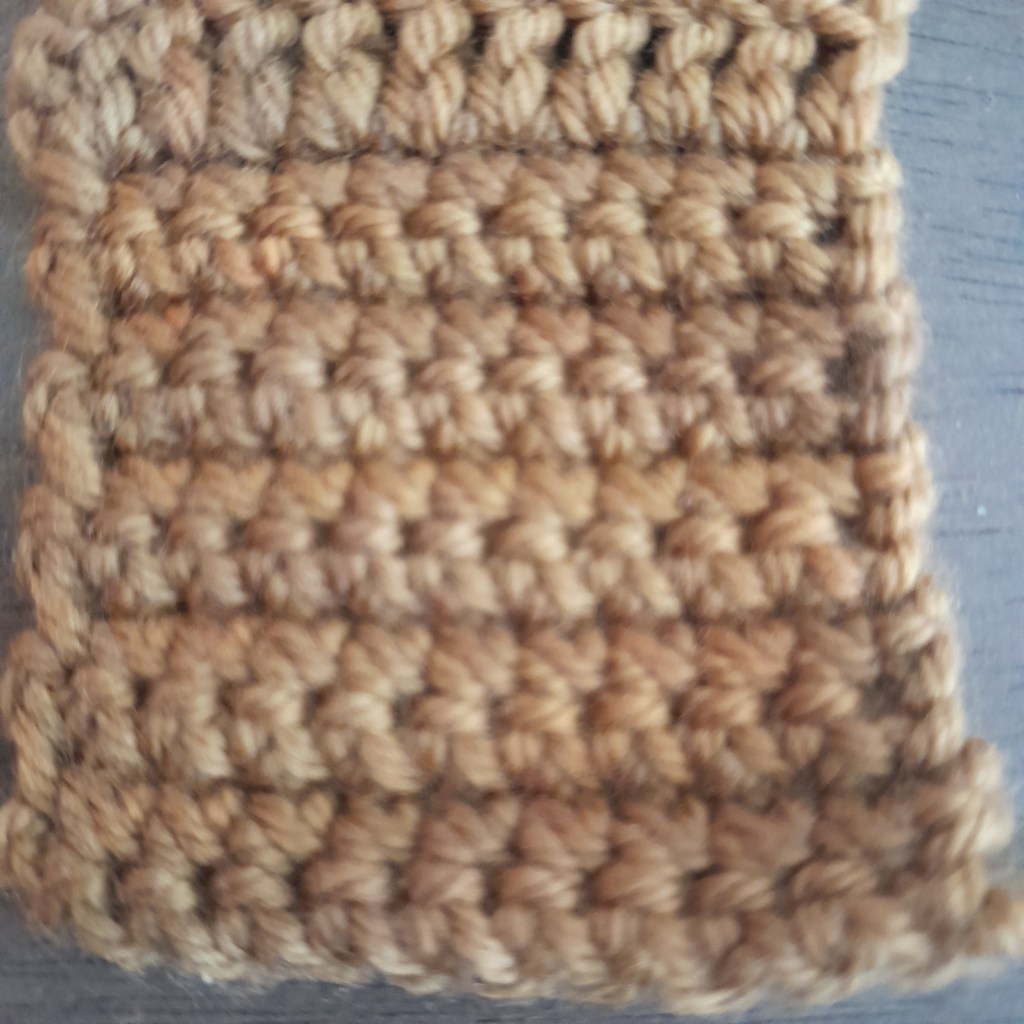
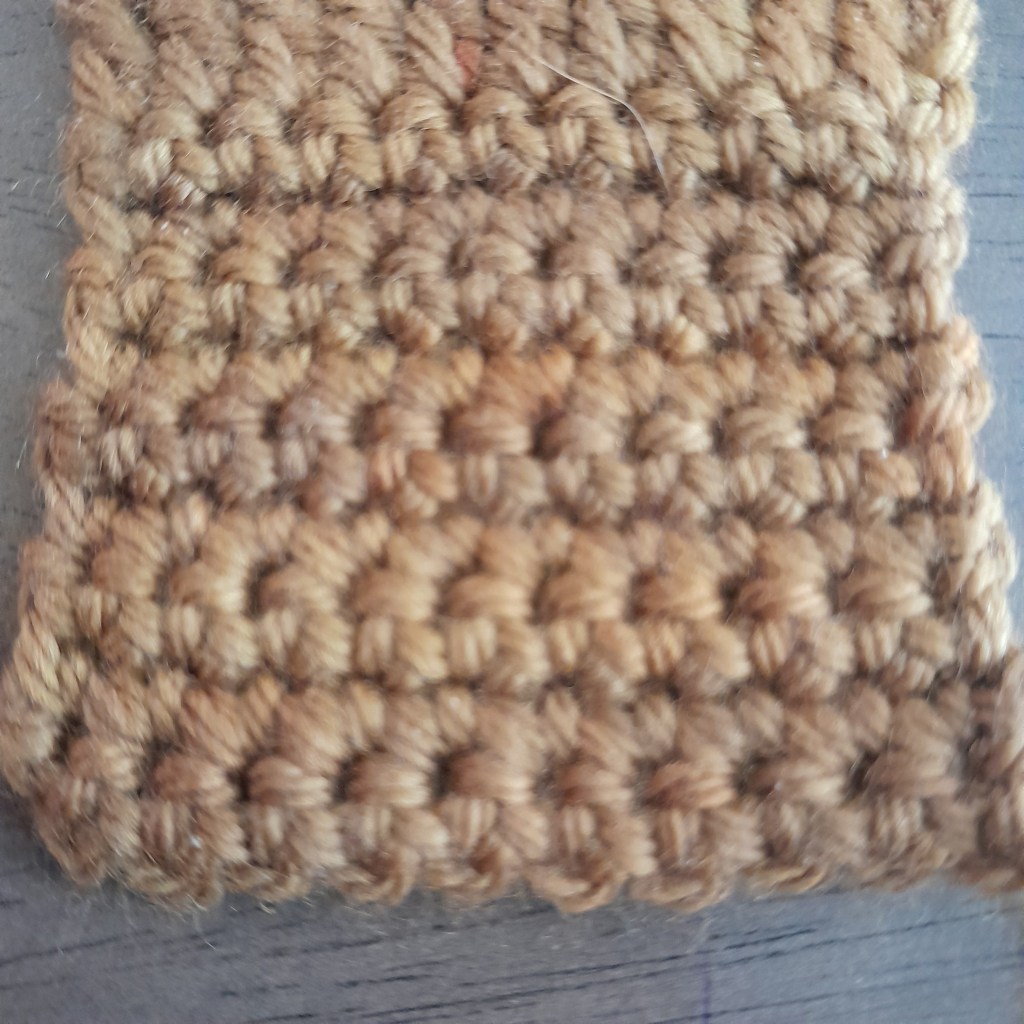
How did your experiment go? What did you learn? Will you change anything?
Here are my results.
For single crochets I work yarn unders every time the yarn needs to go around the hook.
For double crochets I work a yarn over for the first one and then yarn under for all the others.
I only thing that I will change is the wording I use when teaching. If a student notices that they hold their hook differently from me and are taking the yarn around the hook in a different direction, I will explain it is the way they are holding the hook and that both ways work just fine. Beginners don’t know about gauge, unless they already knit, so that’s not a point to worry about. It’s pretty minor difference in my swatches anyway.
There is no “right” way to crochet. As long as you can get a fabric you like, meet the gauge of a pattern, if needed, and not hurt yourself unnecessarily in the process, you’re doing it correctly!
Happy Making!
 Azariahs Fibre Arts