Crochet hooks come in sooo many sizes from the teeny tiny 0.5 mm to the largest standard hook at 30 mm. Hooks also come in a variety of materials. In this post I’m going to share where on the hook the size is determined, how to figure out what size hook you have, what size hook for what weight of yarn and what material for which fiber.
If you have a pile of grandma’s hooks or a baggy of randos from the thrift store, grab them and get ready to learn more about them.
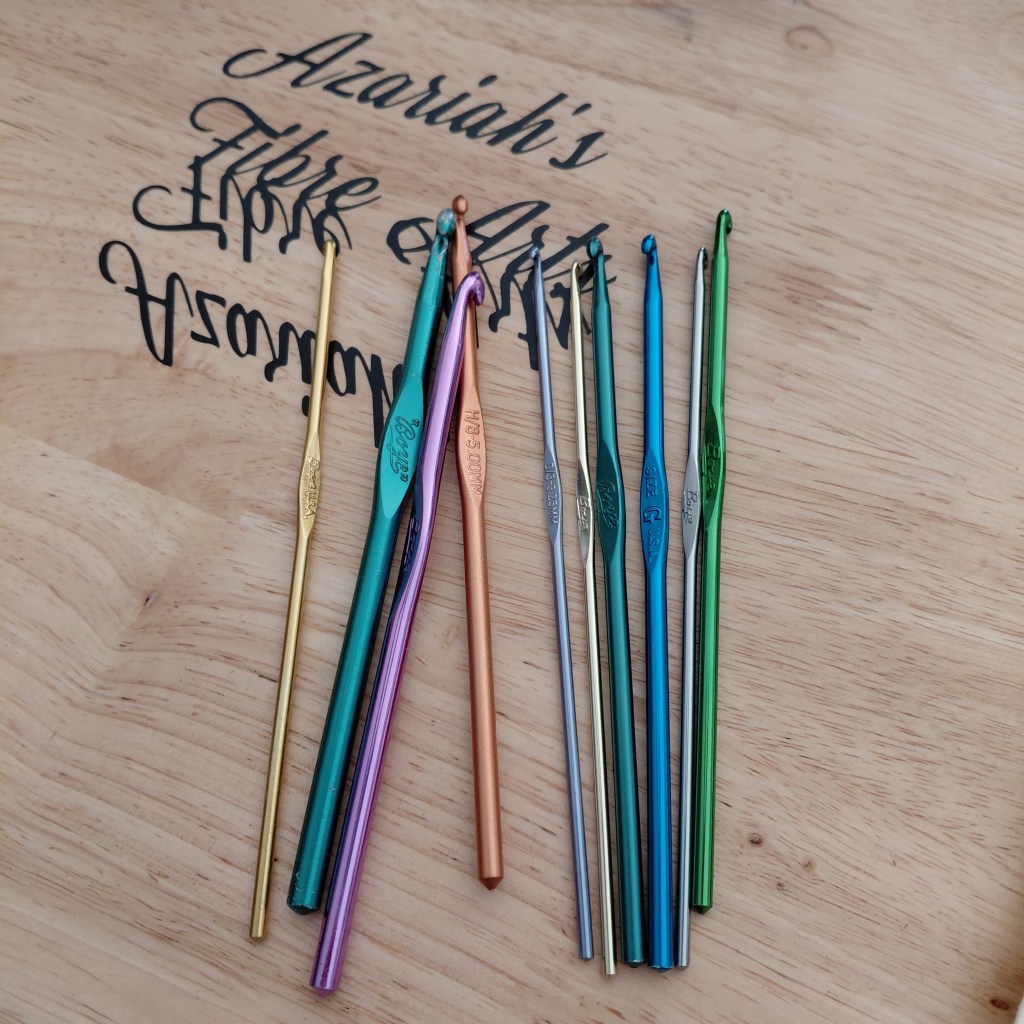
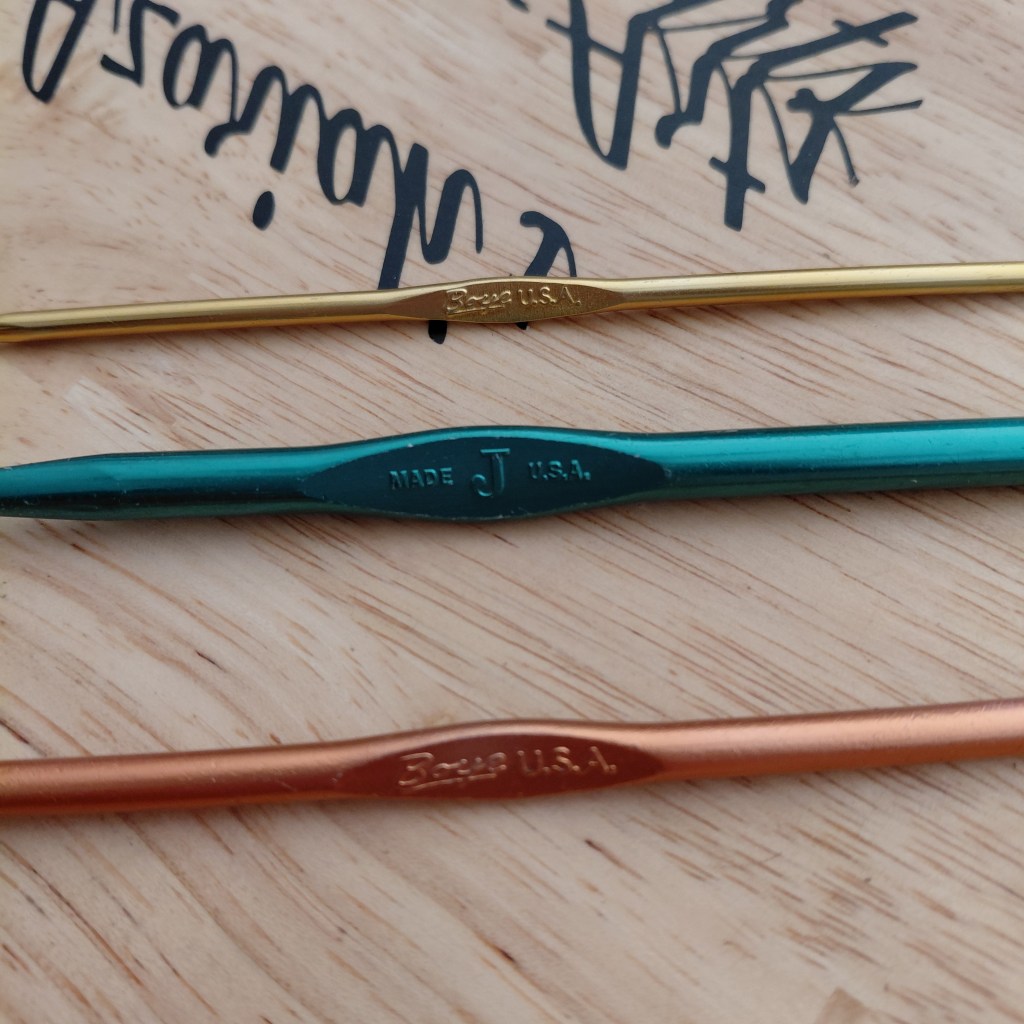
We are going to start with the hooks that we are all most familiar with, the standard mid-range size hooks. These hooks come in plastic, wood and aluminum. I have a vintage collection of these hooks from Boye, when they were still being made in the USA. Many of mine say “USA” on the back of the finger hold area.
These hooks come in sizes B / 2.25 mm – N / 9 mm and will work with any weight of yarn from superfine to bulky.
There are hooks that are much larger all the way up to 30 and 50 mm. I have only ever seen these made out of plastic. If they were made out of metal, even lightweight aluminum, they would be very heavy and hard on the hands. I personally only have “P” and “Q” and I rarely use them. I have heard of “U”, only because my son’s BFF said that if he could use that hook, he’d learn to crochet. So he did.
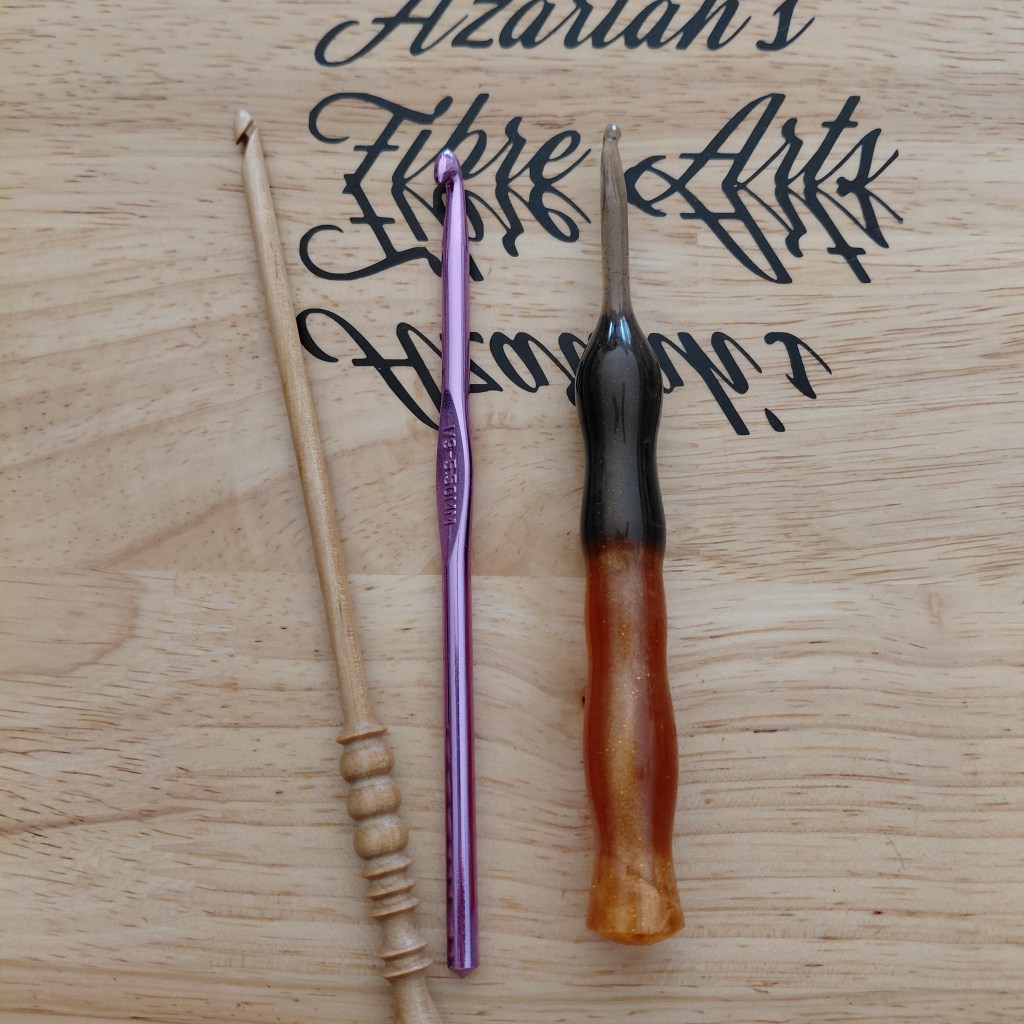
Crochet hooks can be made from a wide range of woods; birch, laminate, bamboo and other more exotic woods.
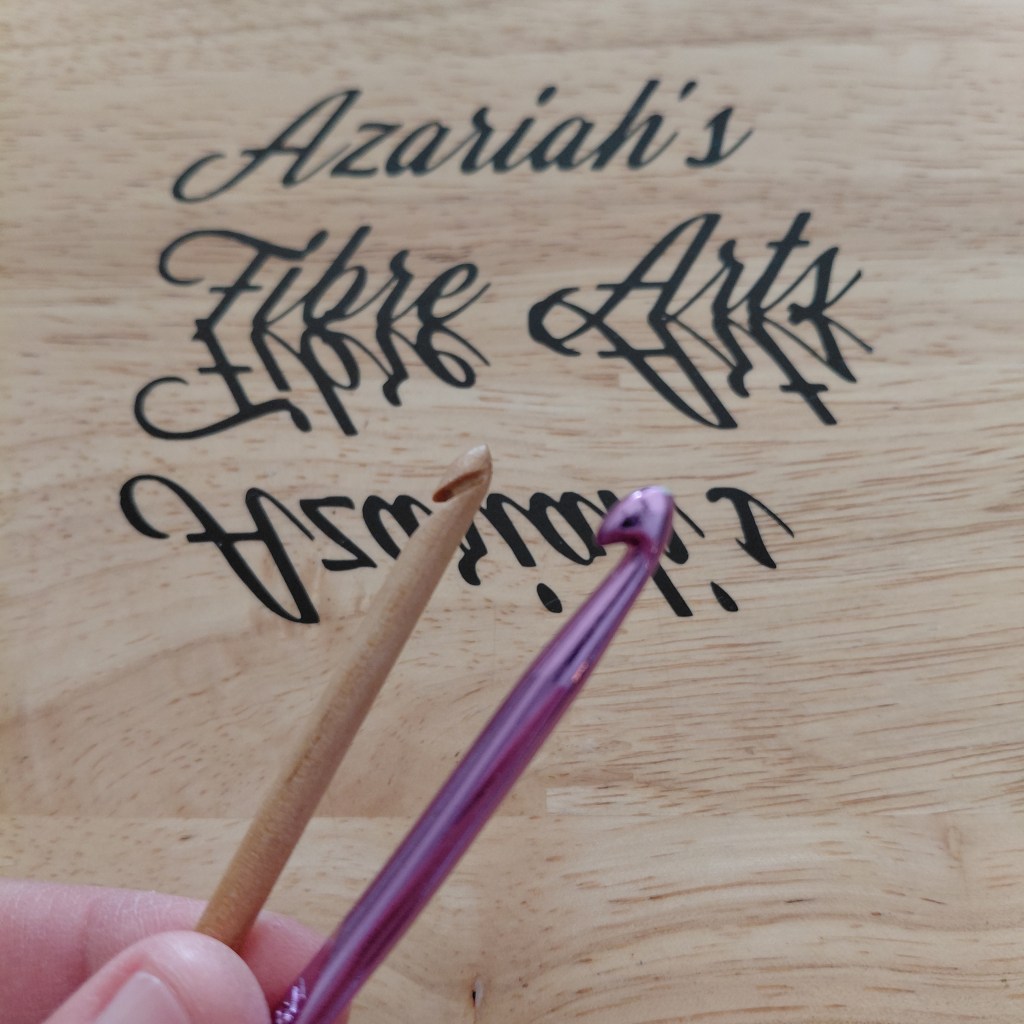
My favorite plastic hooks come from a US made company that no longer makes hooks. These are turned resin hooks and I love them! One example is in the photo above on the right.
With different materials and different manufacturers, there come many different shapes not only of the handles of the hooks, as I’m sure you’ve noticed, but also the shape of the hook itself. The photo below shows how different hooks can look.
Try out different ones. Most hooks are affordable enough to buy and try but it you’re part of a group or have crocheting friends, borrow a some that are different from what you have and give it a swatch. There is a basic crochet pattern in THIS post that can help you with that.
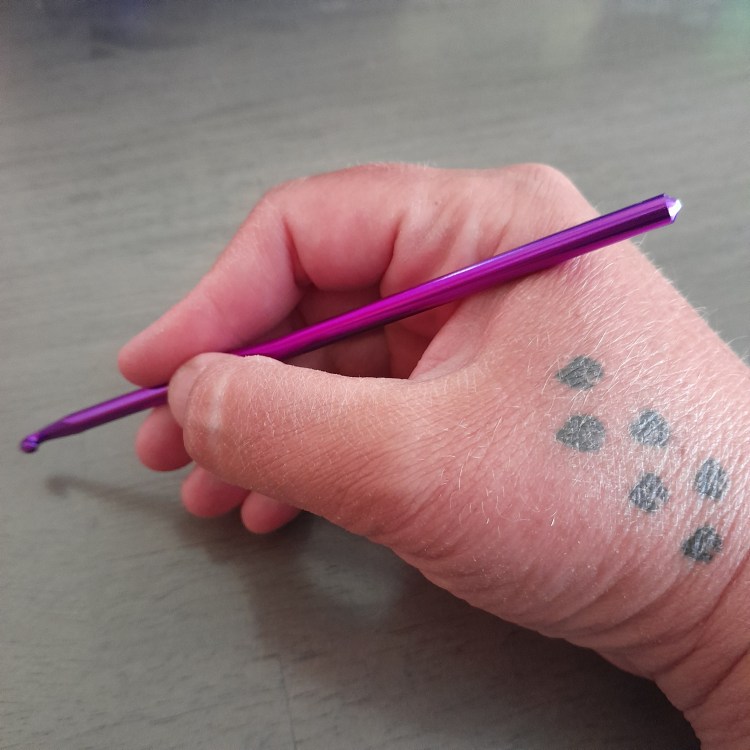
Handle shapes might not work the same in everyone’s hand either. I use the knife hold when I crochet and so far all the handles have worked for me.
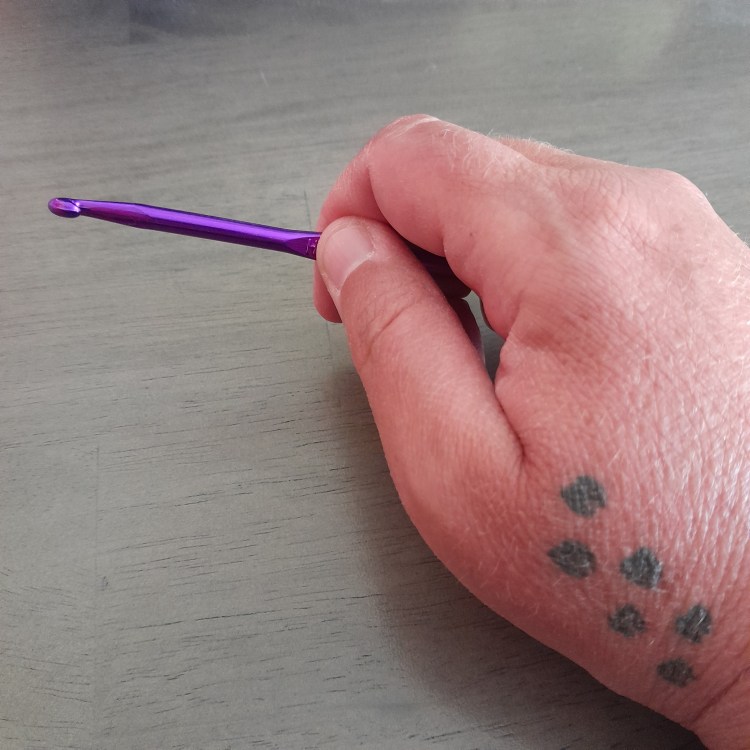
I wonder though about the pencil hold, which my Mom uses and so did my grandmother, is some of the ergonomic hooks will work with that hold.
The material that a hook is made out of will affect its use in different ways with different fibers and with different people. Metal hooks are slick and smooth soft fiber will slide easily. If you are an experienced crocheter this can be great and help you to crochet faster. However it can be very discouraging to a crocheter who is newer or trying to learn something new and the loops won’t stay and the hook.
Wood and plastic are going to have a bit more grab for most yarns and crate more friction. Therefore the loops will stay on the hook easier.
If the hook is not marked or the marking has worn off, how do you find out what size it is? Use a needle or hook gauge. I prefer using a hook gauge because a needle gauge for knitting needles doesn’t always work with the shape of the hook. Sometimes the hook pokes out farther than the shaft and this won’t fit through the hole. A hook gauge has cut outs that you slide just the shaft into, there is a link to one at the end of this post.
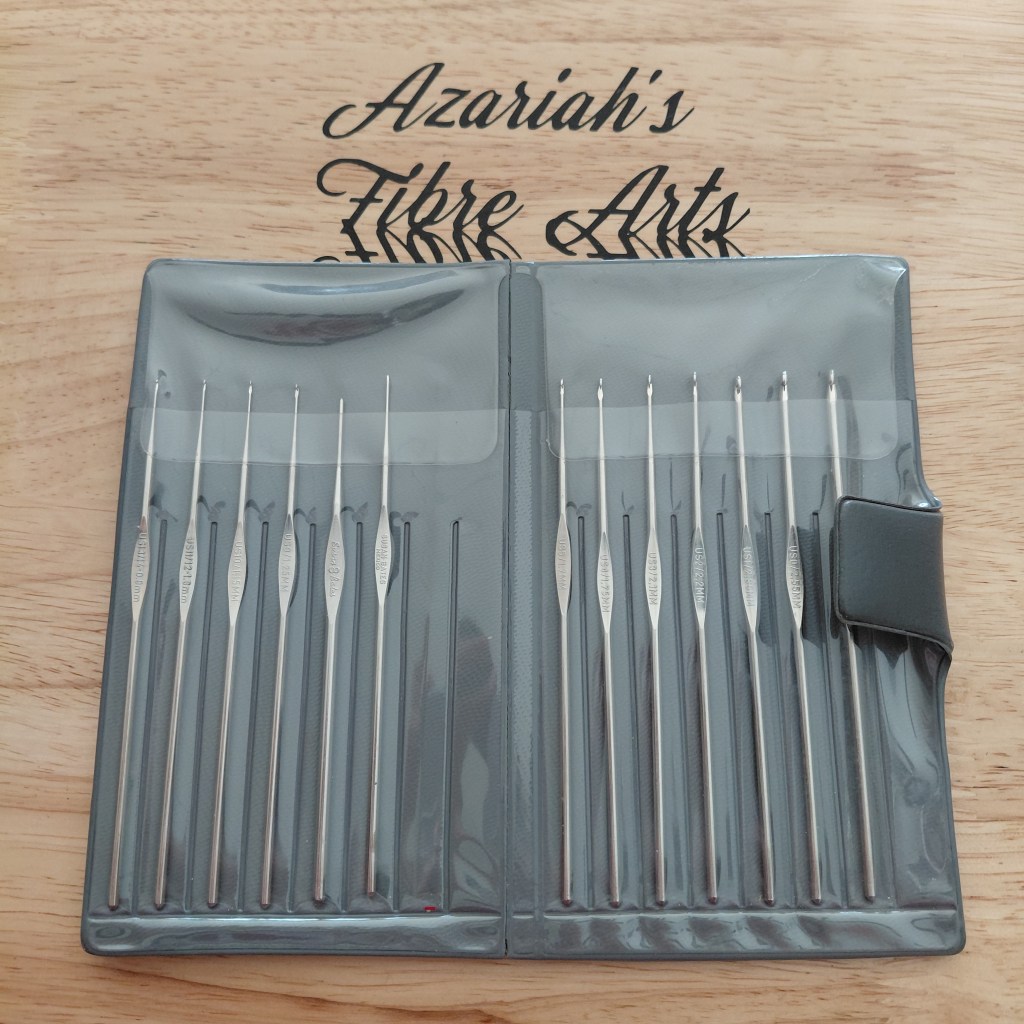
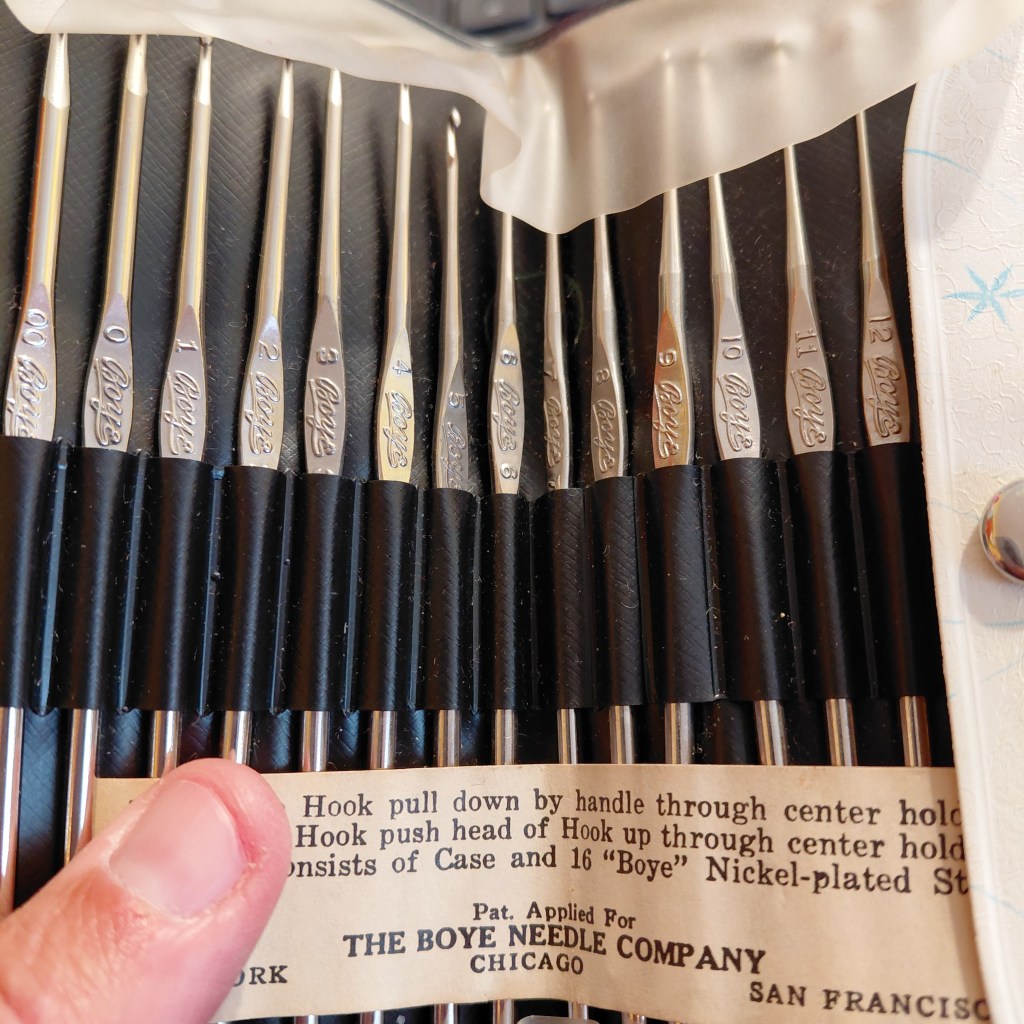
The tiny steel crochet hooks that come in sets sizes 00 / 3.50 mm – 14 / 0.75 mm. The smaller sizes, 0.60, 0.50 and 0.40 mm are from different brands and aren’t usually found in the sets.
As I was doing research for this post, I learned that Boye is no long making the steel hooks in the USA and that Susan Bates, also no longer made in the USA, is only making these hooks with ergonomic handles on them. Searching eBay, Etsy and the like will help you find the vintage ones if you’re interested.
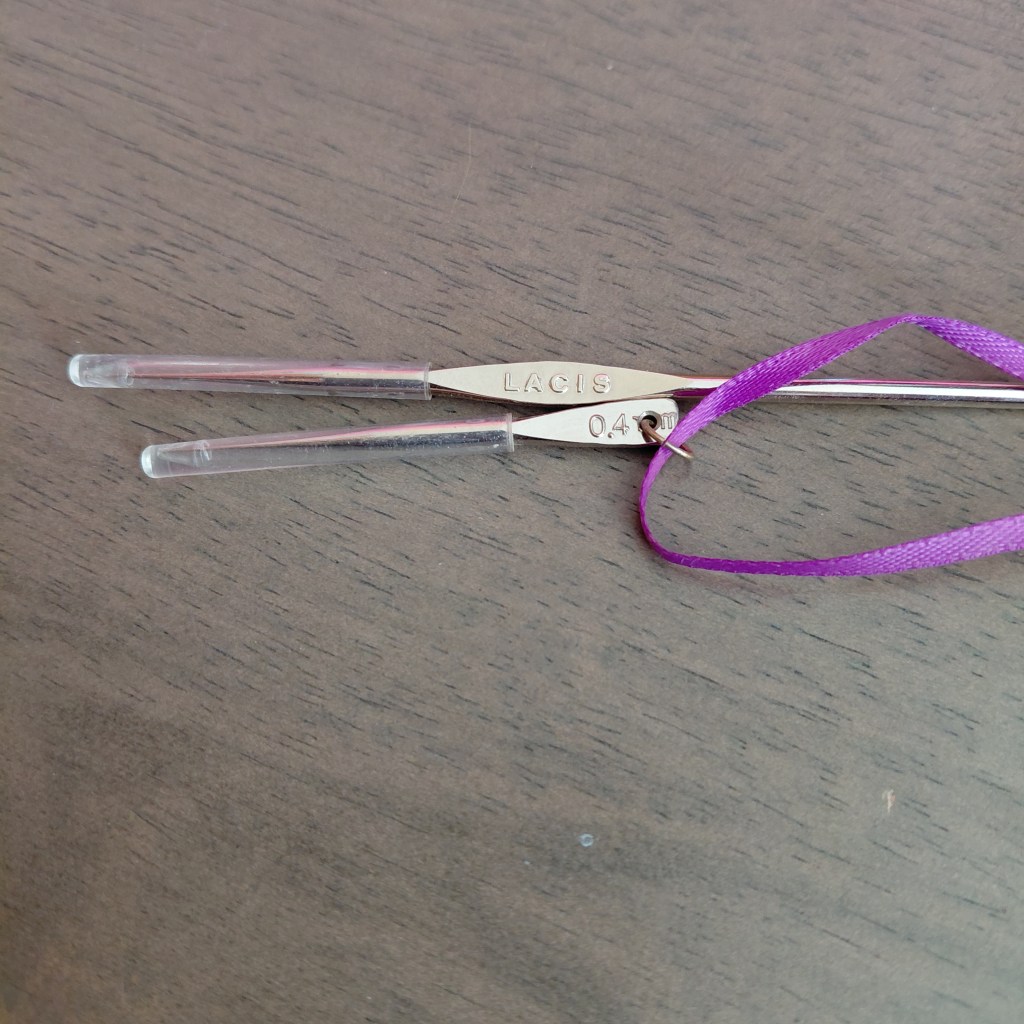
These tiny hooks are to use with thread that comes in sizes from 3 to 120 and is usually made out of cotton. The larger the number the thinner the thread. Think like doilies, bedspreads and other old school items. But also think about hair ties, bandanas and shawls still being made from these great threads today.
As crochet has come together over the years and there weren’t many, if any, standards, these hook sizes can be a bit arbitrary. This is where you really want to pay attention to the metric size of a hook. Unfortunately the older hooks didn’t have the metric just a number. the two smallest sizes of my Susan Bates hooks, in the gray case, have two numbers, just to make things fun.
I was very happy to find THIS website that has a table of different brands with their numbers and the metric. There isn’t a gauge tool to determine the size of these hooks because they are so small. Markings are all you’re going to have to go by. As most of these hooks are made of steel, not sure how Susan Bates is marking their new ones, unless one hook is used A LOT, the numbers shouldn’t rub off too much.
In this Boye set, that is a mix pre-WWII hooks and some that were made before 1970. I don’t know how much use these got but the numbers are still visible. I was excited to pick this set up off of eBay. I am excited to use it!
More resources.
Yarn weight tutorial
Crochet hook gauge
Happy making!
 Azariahs Fibre Arts